

By default, the search ignores German umlauts. Searching for “uber” will also find “über” and so on. This ignorance is not a Relevanssi feature but instead governed by your database. The default database collation WordPress uses (utf8mb4_unicode_ci) ignores all accents, including umlauts.
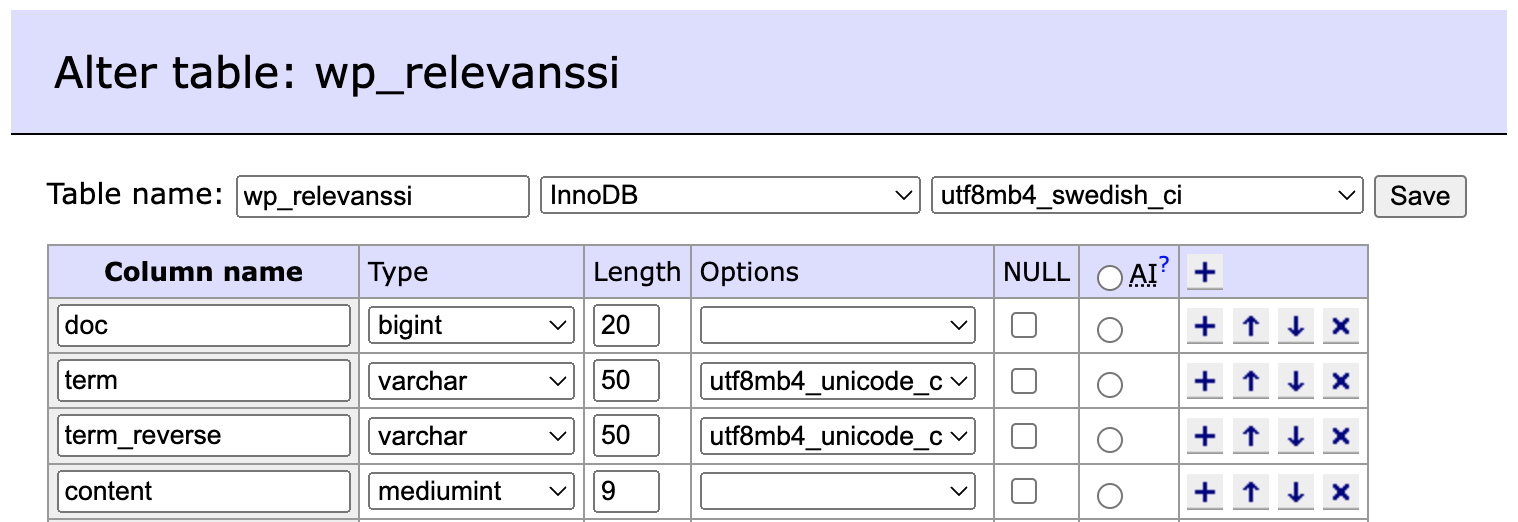
If you want the search to care about umlauts, you can change the collation. For German, use utf8mb4_german2_ci (actually, use utf8mb4_swedish_ci, see comments below):

Now, the database will not ignore umlauts. Relevanssi also removes accents to match what the database does, so you must also undo that. Add this to your site:
remove_filter( 'relevanssi_remove_punctuation', 'remove_accents', 9 );
Once you’ve done these steps, rebuild the index. Now, the search should not ignore the umlauts.
1 Comment. Leave new
Sorry, but the info “If you want the search to care about umlauts, you can change the collation. For German, use utf8mb4_german2_ci” is WRONG.
You need to use utf8mb4_swedish_ci, like always.
It might have worked in some specific use case, but with any other current MySQL or MariaDB server, swedish_ci is the better option, as you will ACTUALLY get umlauts – as one expects – in the term column.
I repeat: NO, DO NOT use utf8mb4_german2_ci, because that doesnt store umlauts. Yes, it allows for querying anything with “ue” as if it was “ü”, but it DOES NOT STORE words with umlauts, sz-ligature.